ACML 2026 IN-PERSON TUTORIAL

From Continual Learning to Self-Evolving Agents

How can AI systems keep learning as their knowledge, tools, and environments change? A tutorial on selective adaptation, active memory, and verified self-improvement.

Learning does not
stop at deployment.

Continual learning has traditionally focused on acquiring new knowledge without catastrophically forgetting prior capabilities. Modern AI systems face a broader challenge: data, user needs, tools, environments, and system architectures all evolve over time.

This tutorial presents continual learning as the foundation for building self-evolving agents. We revisit continual learning in the foundation-model era, treat memory as an active decision mechanism, and develop a loop in which agents diagnose capability gaps, adapt selectively, verify improvements, and consolidate.

Effective self-evolution requires selective, localised, and verifiable adaptation.

Four questions. One common thread.

A set of design decisions that connects every module.

  1. 01 / WHAT

    What to learn?

    Distinguish temporary context shifts from persistent capability gaps.

  2. 02 / WHEN

    When to adapt?

    Decide when new experience calls for a lasting change.

  3. 03 / WHERE

    Where to store?

    Choose between context, memory, modules, and model parameters.

  4. 04 / HOW

    How to verify?

    Check improvements and retained capabilities before consolidation.

From methods
to design decisions.

Who is this for?

ML researchers, students, and practitioners familiar with deep learning and foundation models. No prior background in continual learning or agents is assumed.

By the end of the tutorial, you will be able to:

  • Distinguish transient context shifts from persistent capability changes, and analyse adaptation through the four organising questions.
  • Choose where an update should live based on its persistence, scope, and timescale.
  • Design memory policies for selecting, abstracting, retrieving, and forgetting experience.
  • Diagnose whether a failure calls for changing memory or parameters.
  • Build a diagnosis–adaptation–verification–consolidation loop and evaluate it beyond final-task accuracy.

Six modules.
A connected perspective.

Each module stands alone. Together, they trace a path from continual learning to self-evolution.

150 MINUTES TOTAL
M1

Overview: from continual learning to self-evolving agents

Wu, Gong, Haffari15 min

We map the vocabulary of continual learning, self-evolution, and LLM agents. We distinguish transient context shifts from persistent capability changes, explain why repeated fine-tuning is inefficient, and introduce the four organising questions: what to learn, when to adapt, where to store, and how to verify.

Shared vocabularyAdaptation decisions
M2

Continual learning foundations and the foundation-model era

Dong Gong25 min

We revisit replay, regularisation, parameter isolation, and expansion through their assumptions and stability–plasticity trade-offs. We examine how foundation models reshape forgetting and transfer, motivating selective rather than uniform updates. An adaptation hierarchy connects context and retrieval, external memory, prompts and adapters, modular experts, and backbone parameters.

Stability & plasticityAdaptation hierarchy
M3

Memory in continual learning and self-evolution

Dong Gong30 min

We treat memory as an active decision mechanism: selecting experience, abstracting it, retrieving it, and deliberately forgetting. We compare episodic and semantic, parametric and external, and passive and diagnosis-driven memory, and discuss why larger memory does not imply stronger long-term capability.

Memory policiesExperience selection
M4

Agents that learn: anatomy and where change enters

Tongtong Wu20 min

We describe the components of an agent that learns from its own operation: policy, context, memory, tools, skills, environment, and multi-agent topology. Using evidence of deployment drift in tools, library versions, and knowledge sources, we map the adaptation hierarchy onto these components and separate component-level from policy-level change.

Agent anatomyDeployment drift
M5

Self-evolving agents

Tongtong Wu30 min

We develop a closed loop of experience, capability diagnosis, targeted assistance, selective adaptation, verification, and consolidation. We organise methods into component-level evolution of memory, skills, and tools; policy-level evolution from trajectories and active interaction; test-time adaptation; and structural evolution of agent topologies.

Self-evolution loopSelective adaptation
M6

Evaluation, open challenges, and conclusion

Reza Haffari20 min

We cover introspection and self-evaluation as the gate on the self-evolution loop. Evaluation goes beyond final-task accuracy to retention, adaptation speed, transfer, efficiency, robustness, and error accumulation. Open challenges include model–memory coordination, resource growth, and reliable self-generated learning.

VerificationLong-term evaluation

Closing discussion

All presenters10 min

Module lengths are shown above. The tutorial date, start time, and room are not yet listed here.

Three perspectives.
A shared research direction.

Continual learning, adaptive memory,
and self-evolving agents.

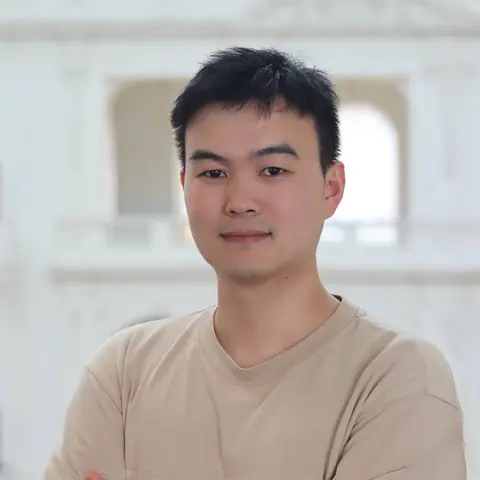
Portrait of Tongtong WuMODULES 1, 4 & 5

Tongtong Wu

Research Fellow

Monash University

Tongtong Wu is a Research Fellow in the Department of Data Science & AI at Monash University. His research focuses on continual learning, adaptive language models and memory, and self-evolving agents.

Tongtong.Wu@monash.edu
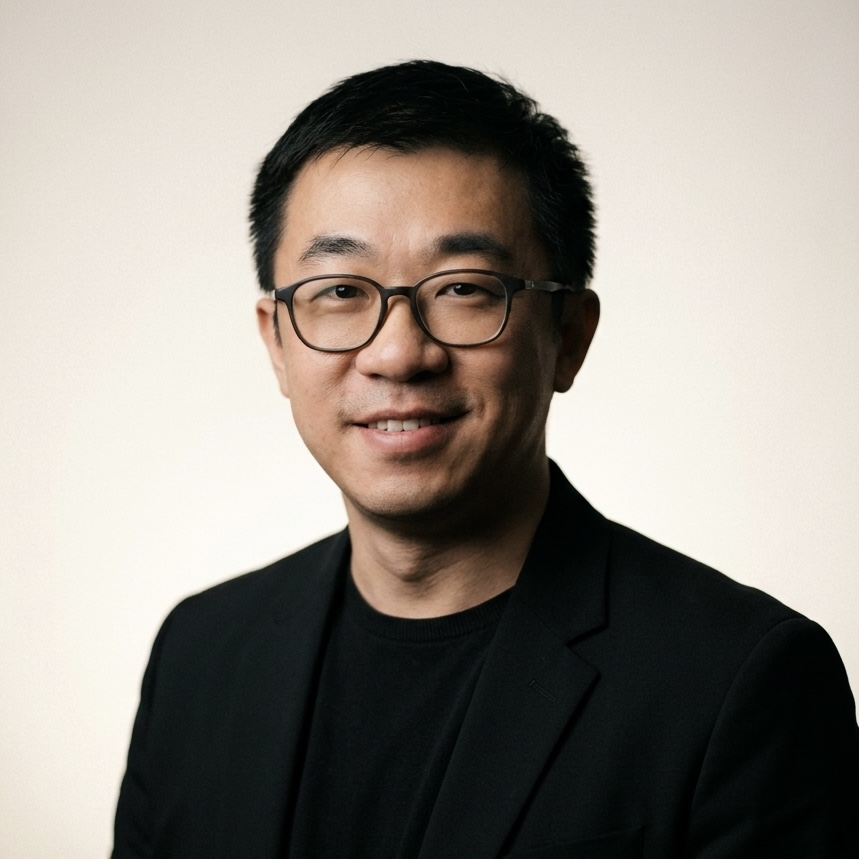
Portrait of Dong GongMODULES 1, 2 & 3

Dong Gong

Senior Lecturer

UNSW Sydney

Dong Gong is a Senior Lecturer in the School of Computer Science and Engineering at UNSW Sydney, where he leads the Artificer AI Lab. His work targets reliable, self-improving AI through continual learning, memory, dynamically expandable architectures, and foundation-model adaptation.

dong.gong@unsw.edu.au
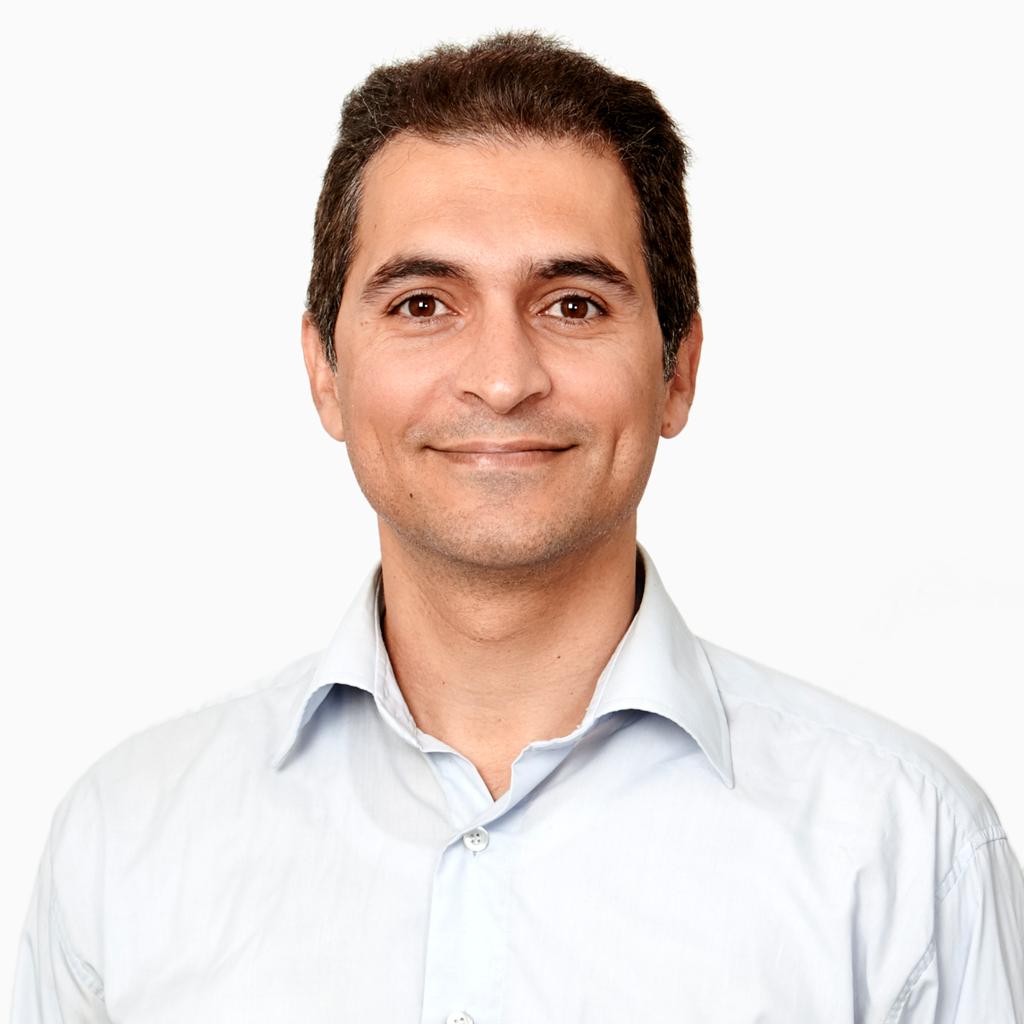
Portrait of Reza HaffariMODULES 1 & 6

Reza Haffari

Professor

Monash University

Reza Haffari is a Professor and previous ARC Future Fellow in the Department of Data Science & AI at Monash University. His research spans continual and lifelong learning, active experience selection and interaction, uncertainty-aware self-evaluation, and reliable adaptation.

Gholamreza.Haffari@monash.edu

Resources
& reading.

Explore the proposal and the research behind the tutorial.

Tutorial proposalFull outline, goals, and references · 2 pages

Start with the surveys

Further reading from the proposal
  • Overcoming catastrophic forgetting in neural networks. J. Kirkpatrick et al. PNAS, 2017.
  • Self-expansion of pre-trained models with mixture of adapters. H. Wang et al. CVPR, 2025.
  • On token’s dilemma: dynamic MoE with drift-aware token assignment. C. Zhao et al. arXiv, 2026.
  • Little by little: continual learning via incremental mixture of rank-1 associative memory experts. H. Lu et al. ICML, 2026.
  • MILES: modular instruction memory with learnable selection. R. Tong et al. arXiv, 2026.
  • Environment-aware code generation: how far are we? T. Wu et al. ICSE, 2026.
  • CARD: conditional design of multi-agent topological structures. T. Wu et al. ICLR, 2026.
  • IntroLM: introspective LMs via prefilling-time self-evaluation. H. Kasnavieh et al. ACL Findings, 2026.